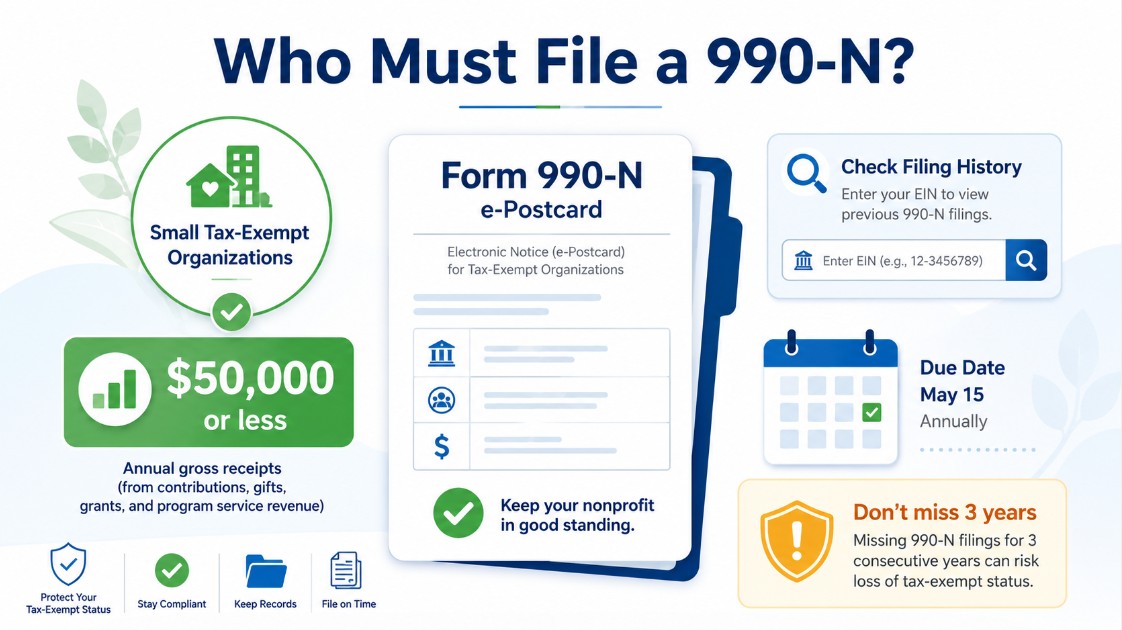
Who Must File a 990-N?
Most small tax-exempt organizations with annual gross receipts normally of $50,000 or less must file Form 990-N with the IRS each year.
Form 990-N is also called the e-Postcard. It is a short electronic filing used by smaller nonprofits that are not required to file Form 990-EZ or the full Form 990.
Who Is Eligible to File Form 990-N?
An organization can generally file Form 990-N when:
- It is recognized as tax-exempt by the IRS.
- Its annual gross receipts are normally $50,000 or less.
- It is not required to file a different Form 990-series return.
- It is not included in a group return filed by a parent organization.
Organizations eligible for Form 990-N may choose to file Form 990 or Form 990-EZ instead, but most qualifying nonprofits use the shorter e-Postcard.
Certain organizations, including private foundations and some political, foreign, religious, and supporting organizations, may have different filing requirements.
When Is Form 990-N Due?
Form 990-N is due on the 15th day of the fifth month after the end of the organization’s tax year.
For example:
- December 31 year-end: May 15
- June 30 year-end: November 15
- September 30 year-end: February 15
Form 990-N must be filed electronically and cannot be submitted before the tax year ends.
Check Your Nonprofit’s Filing Requirement
Reviewing your filing history can help you confirm:
- Which form your organization previously filed
- Its established tax year
- Whether the latest filing was accepted
- Whether any years appear to be missing
- Whether the organization is still listed as tax-exempt
Your organization’s finances may change from year to year, so do not assume that last year’s filing requirement is still correct. Compare your current gross receipts with the IRS filing thresholds.
What Happens If You Miss a 990-N?
The IRS does not generally assess a monetary penalty for filing Form 990-N late. However, the filing should still be completed as soon as possible.
A nonprofit that fails to file a required Form 990-N, Form 990-EZ, or Form 990 for three consecutive years will automatically lose its federal tax-exempt status. The revocation becomes effective on the filing deadline for the third missed year.
Losing tax-exempt status can lead to:
- Federal income-tax obligations
- Problems applying for grants
- Loss of donor confidence
- State registration complications
- Banking and fundraising issues
- IRS reinstatement fees and paperwork
The IRS generally cannot simply reverse a valid automatic revocation. The organization must apply for reinstatement and meet the applicable requirements.
File Your Form 990-N on Time
If your nonprofit’s gross receipts are normally $50,000 or less, it may qualify to file Form 990-N.
Use the search tool on Pro990.org to view your organization’s filing history, check for missing years, and confirm the most current information available before beginning your filing.
Do not wait until a missed return threatens your organization’s tax-exempt status. Review your filing history and submit each required filing by the deadline.
This article provides general educational information and is not legal or tax advice.