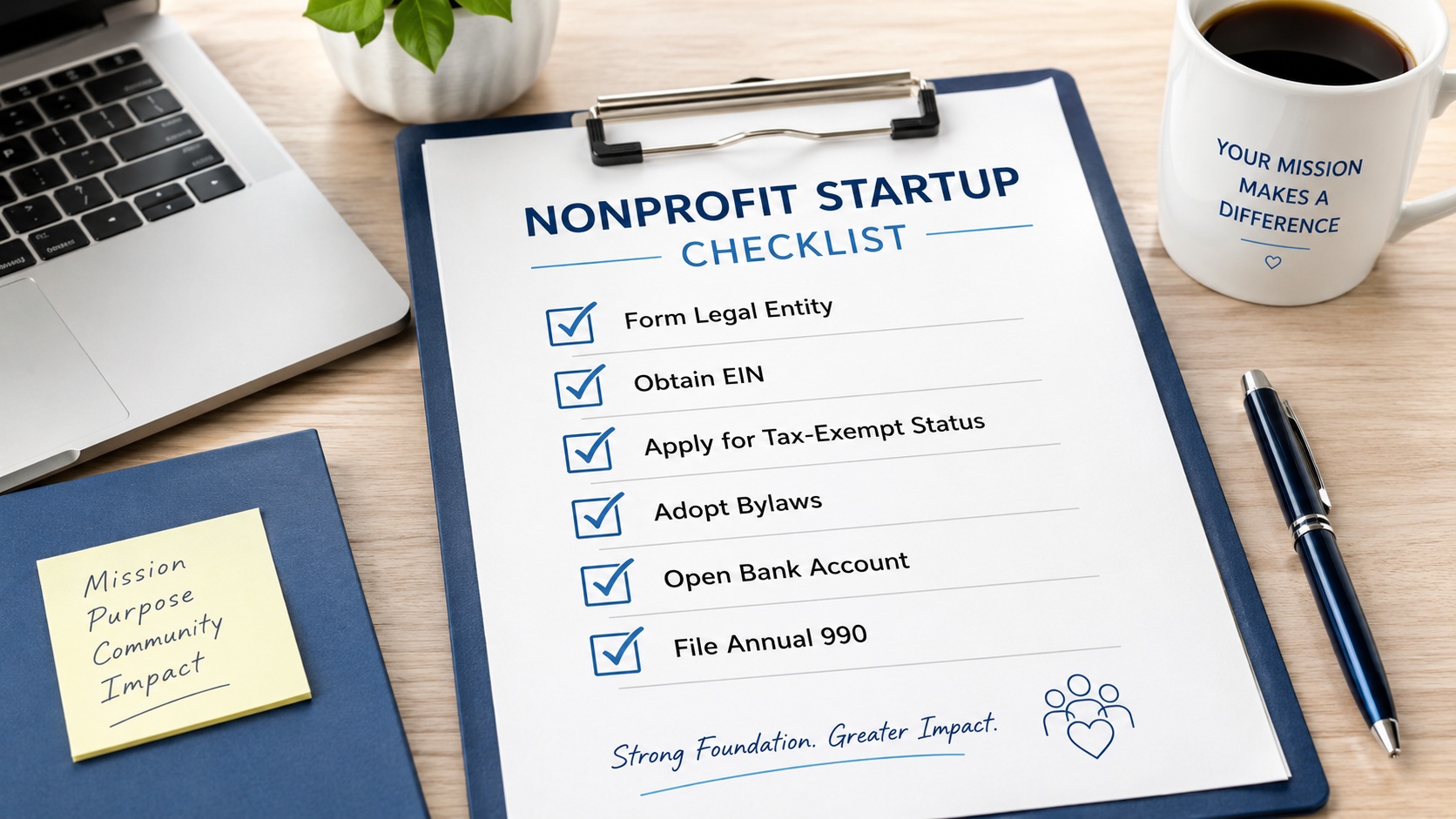
How to Obtain an EIN and Register as Tax-Exempt: Step-by-Step Guide for Nonprofits
Starting a nonprofit is exciting, but before your organization can open a bank account, apply for grants, accept tax-deductible donations, or file annual IRS forms, you need to make sure your organization is properly set up with the IRS.
Two of the most important steps are obtaining an Employer Identification Number, commonly called an EIN, and applying for federal tax-exempt status.
Below is a simple step-by-step guide to help nonprofit officers, board members, churches, booster clubs, PTAs, PTOs, and other organizations understand the process.
Step 1: Form Your Organization at the State Level
Before applying for tax-exempt status with the IRS, your organization should generally be legally formed. For many nonprofits, this means creating a nonprofit corporation with your state.
This usually involves choosing an organization name, filing formation documents with the state, naming officers or directors, and creating basic governing documents such as bylaws.
Your state requirements may vary, so check with your Secretary of State or state business filing office before moving forward.
Step 2: Create Your Governing Documents
The IRS will want to understand how your organization is structured and operated. Before applying for tax-exempt status, you should have clear governing documents.
These may include articles of incorporation, bylaws, a conflict-of-interest policy, and a description of your organization’s charitable, educational, religious, or exempt purpose.
For 501(c)(3) organizations, it is important that your organizing documents include proper language showing that the organization is organized for exempt purposes and that its assets will be used for exempt purposes if the organization dissolves.
Step 3: Apply for an EIN
An EIN is your organization’s federal tax identification number. Think of it like a Social Security number for your nonprofit.
Even if your organization has no employees, it will usually need an EIN to open a bank account, apply for tax-exempt status, file IRS forms, and identify the organization to the IRS.
You can apply for an EIN directly through the IRS. The IRS online EIN application is typically the fastest option. You may also be able to apply by fax or mail using Form SS-4.
When applying, make sure the legal name of the organization matches your formation documents. Also, keep a copy of the EIN confirmation letter for your records. Banks, accountants, grant providers, and future officers may need it.
Step 4: Determine Which Tax-Exempt Status Applies
Not every nonprofit applies under the same section of the tax code. Many charities, churches, schools, PTAs, PTOs, booster clubs, and educational organizations seek recognition under section 501(c)(3).
A 501(c)(3) organization is generally organized and operated for charitable, religious, educational, scientific, or similar exempt purposes. This status may allow the organization to be exempt from federal income tax and may allow donors to make tax-deductible contributions.
Other organizations may fall under different 501(c) categories, so it is important to choose the correct exemption type before applying.
Step 5: Choose the Correct IRS Application
Most organizations applying for 501(c)(3) status use either Form 1023 or Form 1023-EZ.
Form 1023-EZ is a shorter, streamlined application available to certain smaller organizations that meet IRS eligibility requirements. Before using it, the organization must complete the Form 1023-EZ Eligibility Worksheet to confirm it qualifies.
Form 1023 is the longer application used by organizations that do not qualify for Form 1023-EZ or that need to provide more detailed information about their activities, finances, governance, or structure.
Choosing the right form matters. Filing the wrong form or applying before your documents are ready can delay approval or cause problems later.
Step 6: Submit the Application Online
IRS applications for recognition of 501(c)(3) tax-exempt status are submitted electronically through Pay.gov.
Before submitting, review your application carefully. Make sure the organization’s name, EIN, address, officers, purpose, financial information, and governing documents are accurate.
There is also a user fee required when submitting the application. Keep a copy of the submitted application and payment confirmation for your records.
Step 7: Wait for the IRS Determination Letter
After the application is submitted, the IRS will review it. If approved, the IRS will issue a determination letter recognizing the organization as tax-exempt.
This letter is extremely important. Your organization may need it when applying for grants, opening accounts, proving tax-exempt status, or showing donors that contributions may be tax-deductible.
Store the determination letter somewhere secure and make sure future officers know where to find it.
Step 8: Stay Compliant After Approval
Getting tax-exempt status is not the final step. Most tax-exempt organizations still have annual IRS filing requirements.
Depending on the organization’s size, it may need to file Form 990-N, Form 990-EZ, or Form 990 each year. Smaller organizations often file Form 990-N, also called the e-Postcard, while larger organizations may need to file a more detailed return.
Failing to file for three consecutive years can cause the organization to automatically lose its tax-exempt status.
Step 9: Check Your Organization’s IRS Status
Once your organization has an EIN or tax-exempt status, it is a good idea to periodically check its IRS record.
This helps confirm that your organization is properly listed, active, and recognized by the IRS. It can also help new officers understand whether the organization has maintained compliance.
You can use Pro990.org’s Free Search Tool to look up your organization and see whether it appears in IRS records.